Recognition with source evidence
Symbols, tags, linework, cross-page links, flow cues, ambiguity and evidence localization.
PDF recognition · symbol grounding · document evidenceSUPPORT / TUTORIALS
Practical P&ID and SOLIDWORKS tutorials, engineering answers and downloadable guides. Start with the task you want to learn.
LEARNING RESOURCES
02 / PUBLISHED ARTICLES
19 articles address real customer, engineering and investment decisions. Every article names its reader, sources, limitations and review date.
Constrain a practice circle by separating centre position from diameter, then verify that the sketch responds to the intended design change.
Trace a real published tank-and-pump diagram into separate material-flow, branch and instrument-signal records, with an attributed full-size illustration.
Record import settings, inspect body types and units, review Import Diagnostics findings, and verify the geometry before using a STEP model in an assembly.
Read component occurrences and referenced configurations from a small assembly, compare top-level and nested results, and verify the output by hand.
Read a P&ID step by step and build a connection worksheet with source evidence, flow conditions and explicitly unresolved questions.
Inspect mate errors, isolate conflicting or missing relationships, and verify the intended movement with a small assembly exercise.
Create a small VBA macro that reads the active document title and path, then verify saved, unsaved and no-document cases.
Trace a BOM part number from its native file and configuration to the displayed table, using a two-configuration worked example.
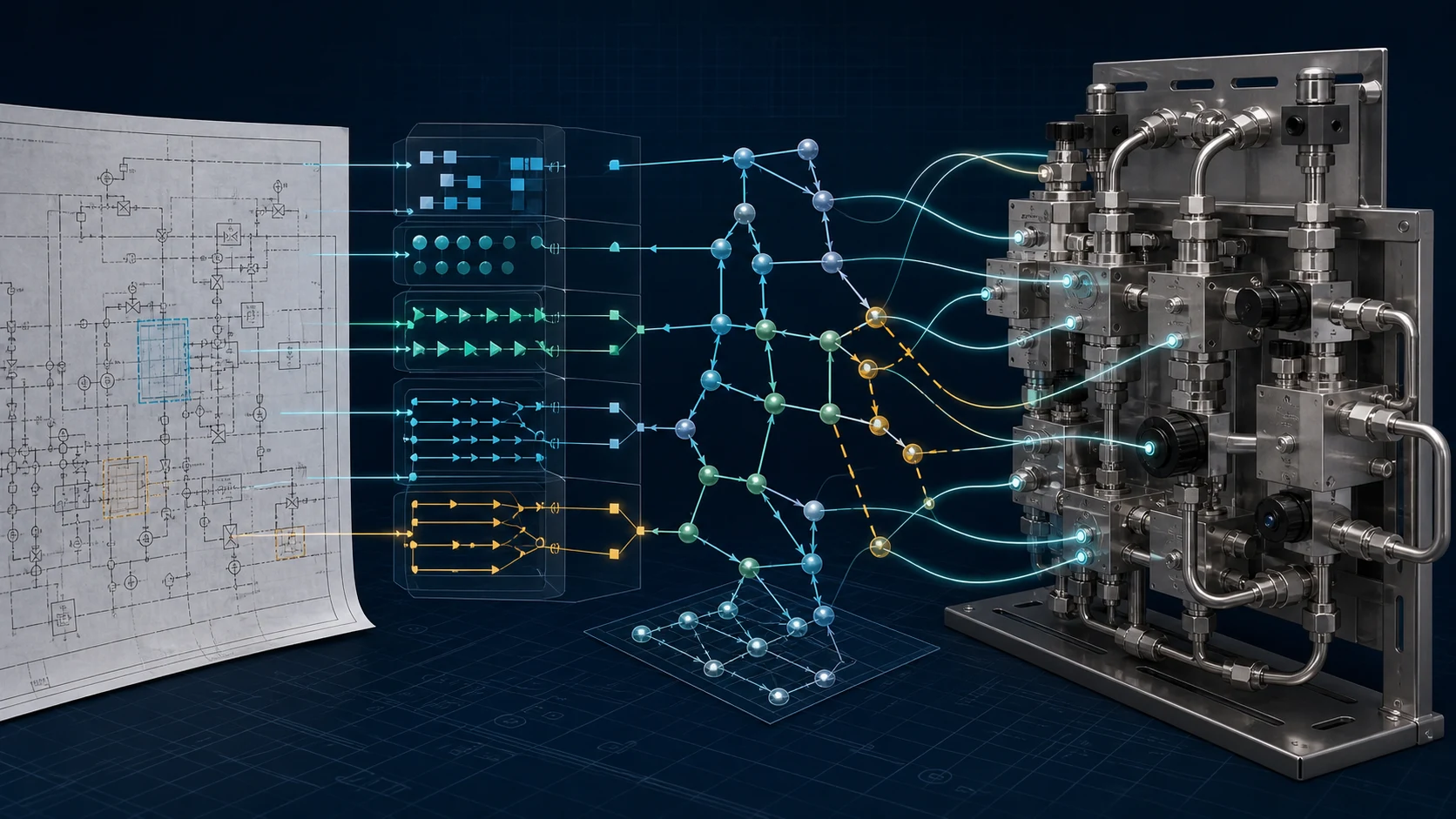
OCR can recover characters. P&ID understanding must bind source evidence to identities, connectivity, direction, conditions and unresolved engineering meaning.
The difference is economic and operational: one sells generation, while the other is accepted only when a declared engineering obligation produces an artifact, evidence…
Compute consumption is a cost metric. Accepted engineering work is the value metric. Outcome-accountable industrial AI connects the two with native artifacts, evidence, refusal…
Run a pilot when the engineering scope, approved parts, acceptance obligations and human release authority can all be declared before generation starts.
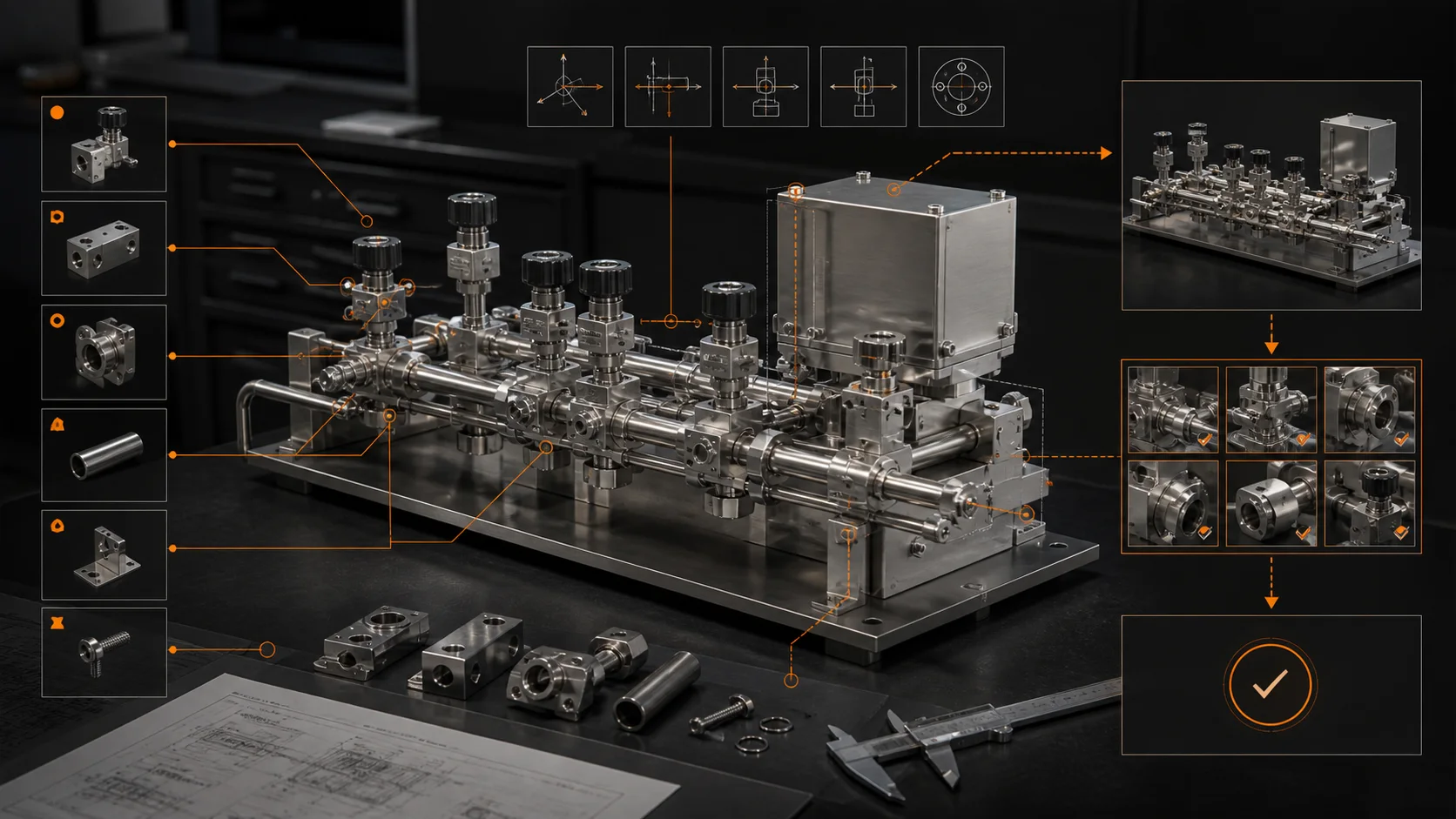
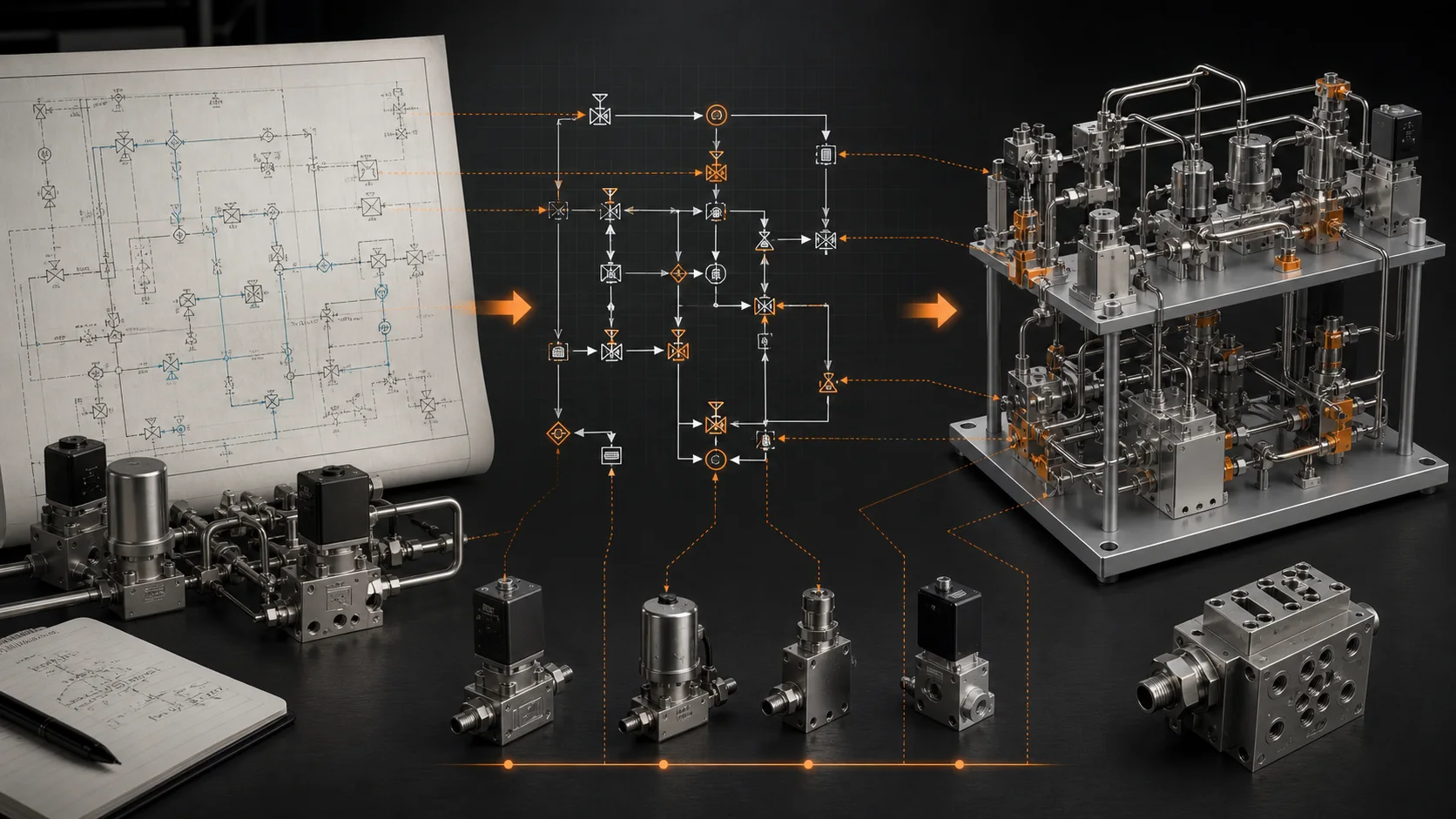
A trustworthy assembly pipeline must preserve identity and evidence through document recognition, topology, part interfaces, 3D layout, CAD execution and round-trip verification.

The defensible wedge is not CAD file reading alone; it is the closed engineering compiler from ambiguous process intent to a native artifact and…
Measure obligation closure, engineering review, rework and failure detection against a frozen baseline before publishing a productivity percentage.
A P&ID is pilot-ready when its revision, conventions, source evidence and in-scope engineering obligations can be frozen—even if some observations remain explicitly unresolved.
The defensible layer is not OCR or CAD file access alone; it is the evidence-preserving conversion of imperfect engineering documents into customer-specific, testable obligations.
A production-oriented formalizer preserves source regions, competing interpretations, identity, connectivity, direction and state before it emits any design obligation.
Acceptance must measure engineering identities, edges, direction, conditional state, evidence and false passes—not only OCR accuracy or demo appearance.
Start with your decision
Choose the decision you need to make. Each route opens a source-backed article with a declared audience, limitation and next action.
03 / SIX TECHNICAL PILLARS
Each pillar is an independent body of engineering work. Together they close the loop from an ambiguous document to an editable assembly and a traceable verdict.
Symbols, tags, linework, cross-page links, flow cues, ambiguity and evidence localization.
PDF recognition · symbol grounding · document evidenceDirection, valve state, bypasses, conditional connectivity, conservation and graph-level fault detection.
directed graph · process state · flow reasoningBOM/SAP/PDM identity, ports, axes, sealing faces, handedness and approved interface evidence.
part identity · B-Rep · interface evidenceXYZ placement, orientation, layer changes, Block/Bridge realization, keep-outs and orthogonal 3D routing.
3D layout · spatial constraints · routingAssembly IR, existing qualified models, component insertion, pose, mates, routing tasks and .sldasm output.
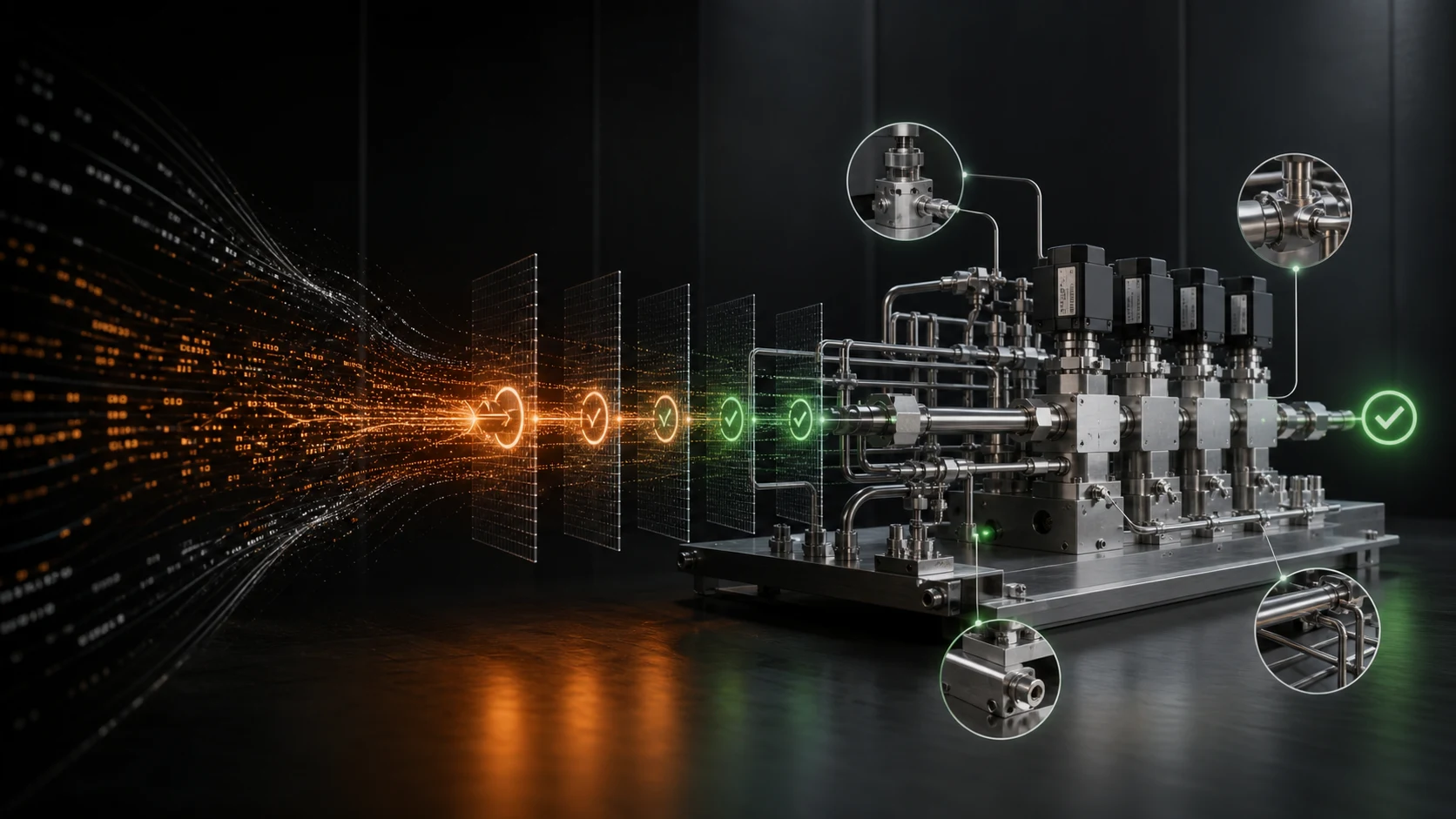
Assembly IR · native SolidWorks · matesReopen, extract, rebuild, trace each P&ID edge to a physical path and fail closed when evidence is incomplete.
round trip · provenance · fail closed03 / CITATION STANDARD
External engineering statements cite standards bodies, CAD vendors or primary research. MST implementation statements cite a versioned evidence record, artifact hash or explicitly bounded deployment record. A reference is never used to imply a capability it does not prove.
Suggest a hard question
Send a non-confidential engineering question. Strong questions may become a source-backed technical note or controlled public challenge.
Operated by MOORE SOLUTION TECHNOLOGY PTE. LTD. · Singapore UEN 202315239EANSWER-READY NEXT STEPS
Ask your question and leave your company email. The MST team will follow up directly.