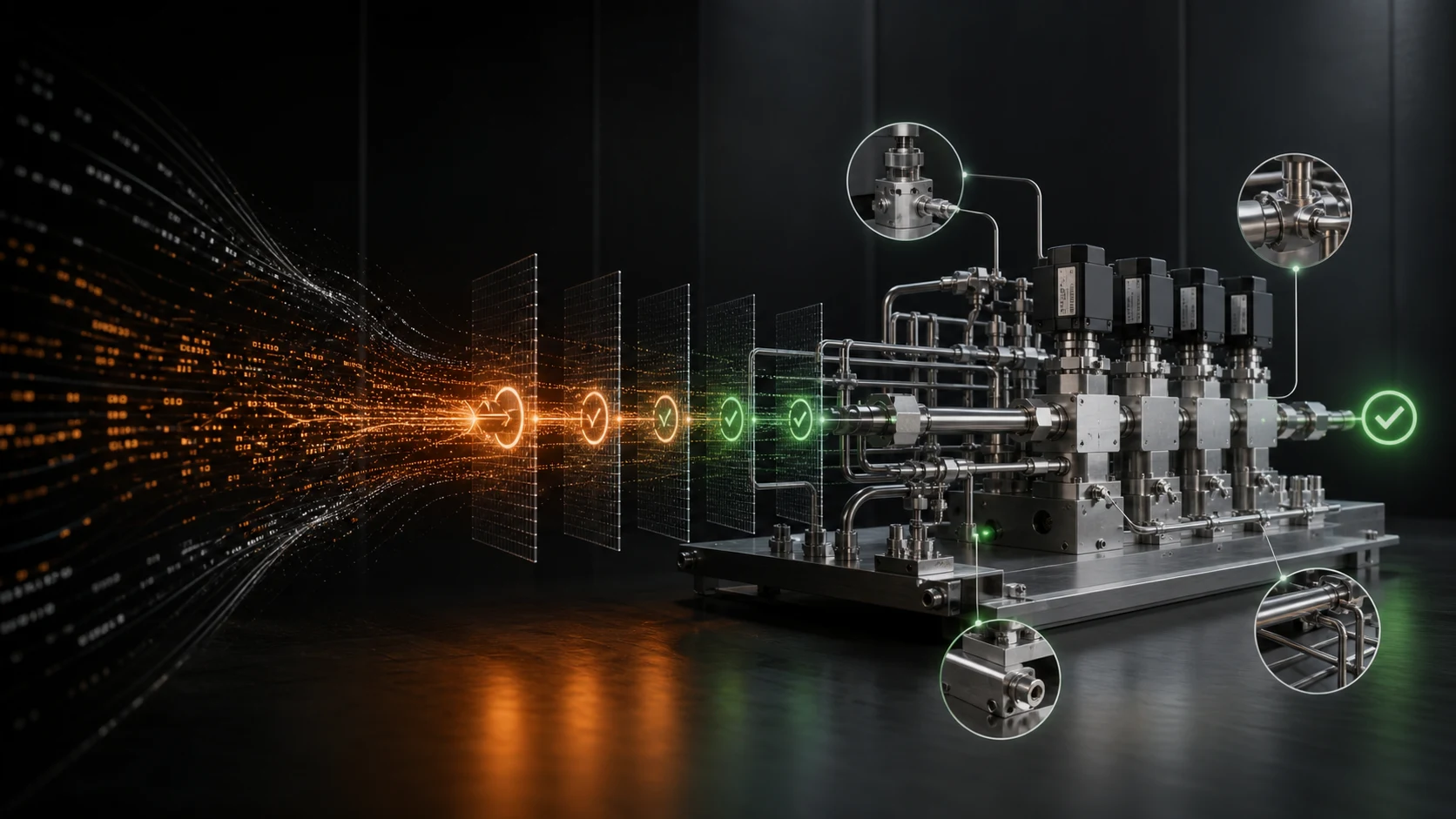
Direct answer: token-only AI is paid for producing computation or responses; proof-carrying industrial AI is evaluated against a declared physical-world obligation. Its deliverable is not persuasive language. It is an executed engineering artifact, traceable evidence and an explicit verdict under human authority.
The economic distinction
In a token-priced interaction, the customer generally pays whether the response is correct, incomplete or wrong. That can be appropriate for exploration, drafting and low-consequence assistance. It does not align the unit of delivery with a production engineering result.
Equipment engineering uses a different unit of value. A connection is realized or it is not. An approved part is present or it is not. A mate exists in the native assembly or it does not. The model may help propose a solution, but the product must execute and test the obligation before claiming completion.
A seven-part outcome contract
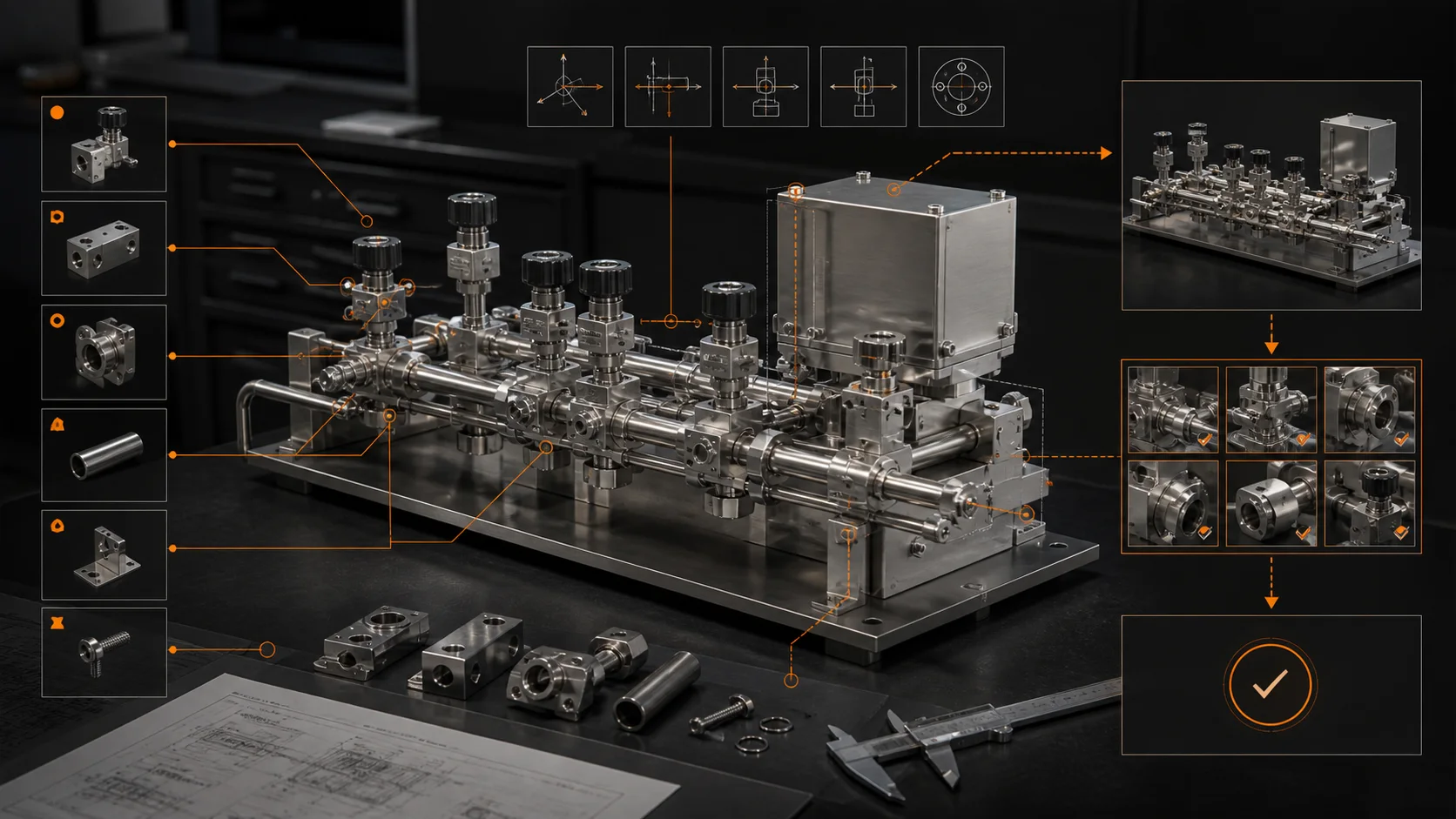
- Identified input: frozen P&ID, BOM, model library, boundary and rules.
- Engineering obligation: the exact connection, placement or validation requirement.
- Declared scope: supported equipment class, data conditions and exclusions.
- Real execution: the system operates the native engineering toolchain.
- Native artifact: a reviewable SolidWorks assembly rather than a rendered substitute.
- Evidence and verdict: realized facts either satisfy the obligation or fail closed.
- Human authority: a qualified engineer controls production release.
Why evidence is part of the product
W3C PROV-DM defines a domain-independent model for relating entities, activities, agents and derivations. Industrial engineering needs more specific evidence, but the underlying requirement is similar: a reviewer must know what was used, what happened, what was produced and who carries authority.
NIST’s AI Risk Management Framework is voluntary and use-case agnostic. It emphasizes trustworthiness considerations in design, development, use and evaluation, including validity, reliability, accountability and transparency. It does not certify MST or prescribe an equipment-design architecture. It supports the broader point that AI trustworthiness must be operationalized and measured in context.
Failure is a first-class output
A proof-carrying system can be more useful when it refuses. If the component identity is unresolved, a sealing face is not proven or the layout violates a boundary, the safe output is not a plausible assembly. It is a bounded failure record that tells an engineer what evidence is missing.
This changes the product conversation. The question is no longer “How human-like is the answer?” It becomes “Which engineering obligations can the system close, which can it only propose, and which must it refuse?”
What the validation contract does not mean
Proof-carrying industrial AI names a validation and outcome-accountability contract inside Engineering Intelligence. It is not a claim of zero risk, universal autonomy or automatic legal liability transfer. Evidence can be incomplete, acceptance criteria can be wrong, and downstream manufacturing remains governed by customer processes. Human engineering approval is not decorative; it is part of the authority model.
MST’s first wedge
MST applies this validation contract within its Engineering Intelligence system, beginning with semiconductor process-equipment modules: P&ID PDF recognition, directed/conditional topology, approved component models, continuous 3D physical layout, native SolidWorks assembly and reverse verification. Expansion to other equipment domains depends on new domain rules, libraries, acceptance tests and deployment evidence.
References
- W3C Recommendation — PROV-DM: The PROV Data Model.
- NIST AI 100-1 — Artificial Intelligence Risk Management Framework 1.0.
Limit: “Proof-Carrying Industrial AI” names MST’s validation and outcome-accountability contract for Engineering Intelligence; it is not the parent product category. The cited sources support provenance and AI risk-management concepts; they do not endorse the term or verify MST product performance.
MST Engineering Intelligence. “Token-Only AI vs Proof-Carrying Industrial AI.” MST Engineering Intelligence. Updated 2026-08-23. https://mst-us.ai/token-only-ai-vs-proof-carrying-industrial-ai/
CUSTOMERS · PARTNERS · INVESTORS
Talk to the engineering team.
Bring a non-confidential P&ID question, pilot boundary or technical diligence request. Protected engineering material is exchanged only after identity, NDA and scope review.
Operated by MOORE SOLUTION TECHNOLOGY PTE. LTD. · Singapore UEN 202315239E