A smaller cabinet. The same components. How would AI lay it out?
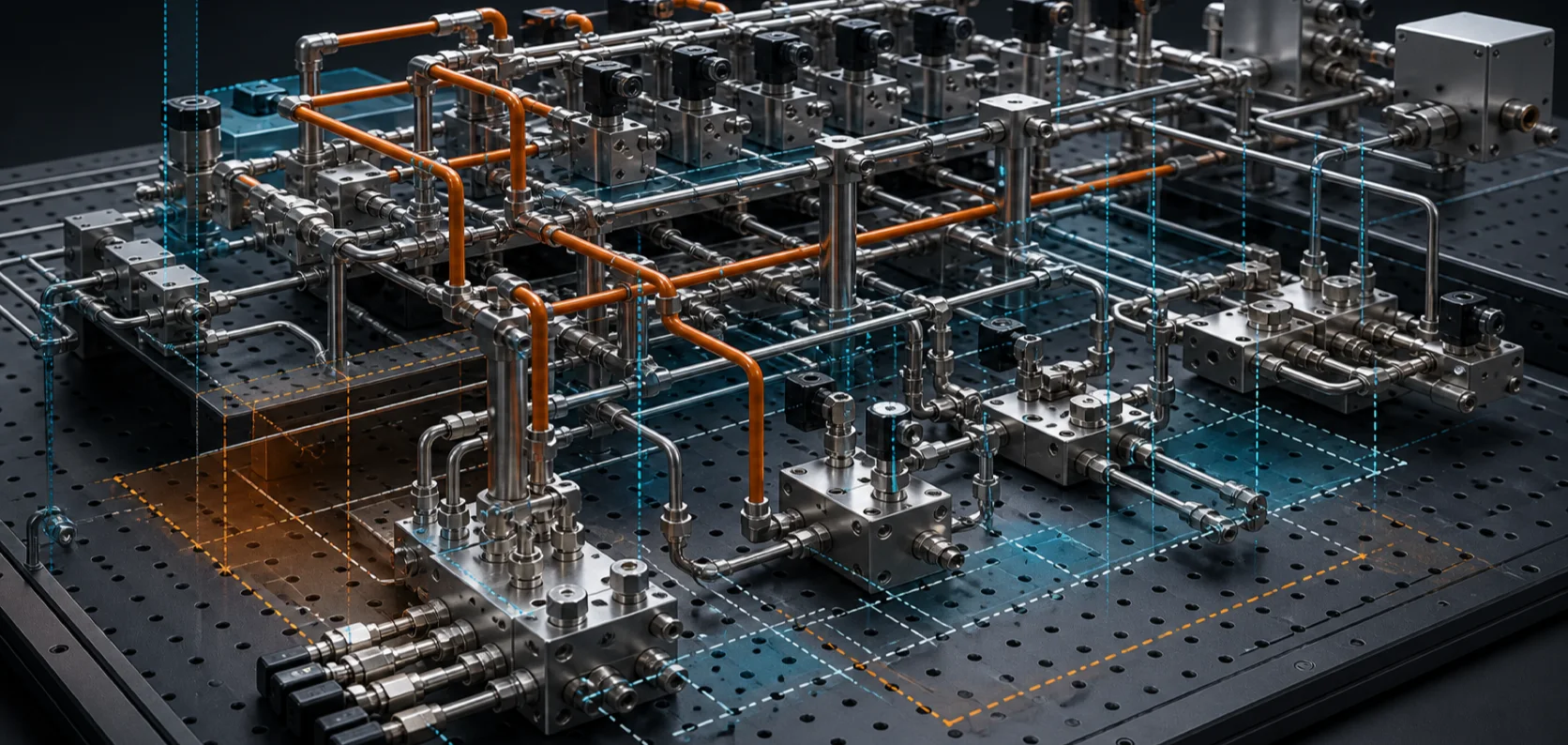
A valve can fit on the mounting plate while leaving too little room for a fitting, a tube bend or maintenance access. MST considers component positions and connection paths together, using your approved parts, P&ID connections and declared space constraints to evaluate a workable equipment layout.
MST AI Engineer evaluates component positions and connection paths together, so a layout can be checked for routable ports before the selected arrangement is built in SolidWorks. The current implemented scope—controlled modular semiconductor process-equipment assemblies—uses your approved parts, declared objectives and hard constraints.
WORKING IN A TIGHT SPACE
How can I fit the components and still connect every port?
Start with one gas panel, gas box or equipment module. Bring the available envelope, approved native parts and required connections; identify the constraints your engineer needs to check.
Engineers describe tight skid layouts and repeated adjustments to make piping fit in this equipment-skid workflow discussion. These are public workflow examples, not MST customer results.
01 / BUYER FIT
Treat layout and routing as one coupled feasibility problem.
02 / REDUCE LAYOUT REWORK
Why do I keep moving a valve after I change the pipe route?
The valve position determines where the route starts, while the available routing space limits where the valve can go. Fixing one without checking the other can create another round of changes. Evaluate placement and routing together, using the actual fittings and installation clearances your design requires.
PUT THIS INTO PRACTICE
Continue with your own assembly task
Qualification question
Which layout decision creates the most routing rework?
Describe one non-confidential module boundary, the allowed component set, the hard constraints and the objective your engineers currently trade by hand.
Review the optimization case