
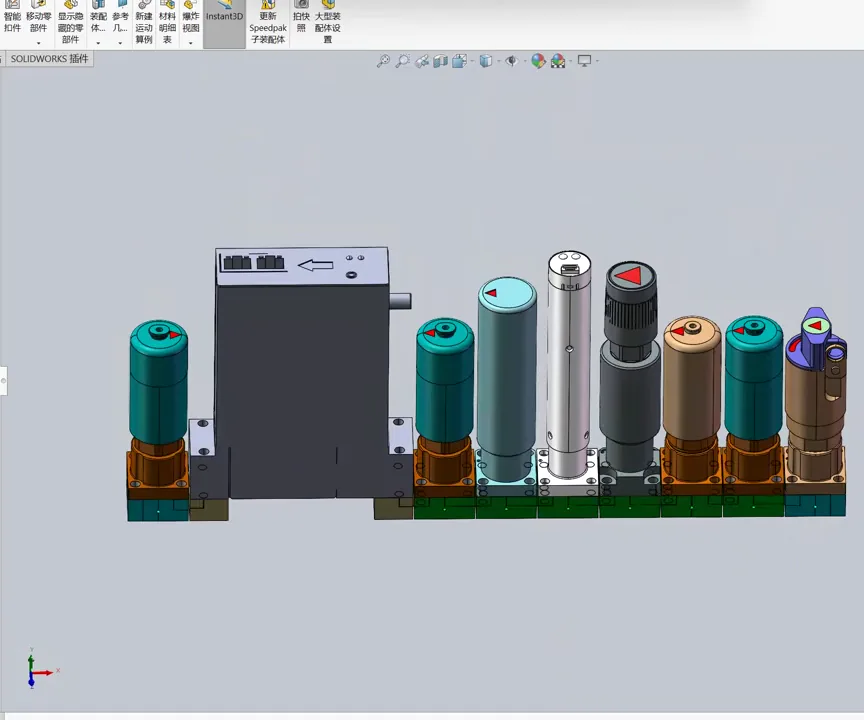
Product launch: MST Engineering Intelligence now presents Mechanical Assembly AI as an implemented, controlled-scope product capability for turning P&ID process intent and customer-authorized native models into a physical equipment assembly in SolidWorks.
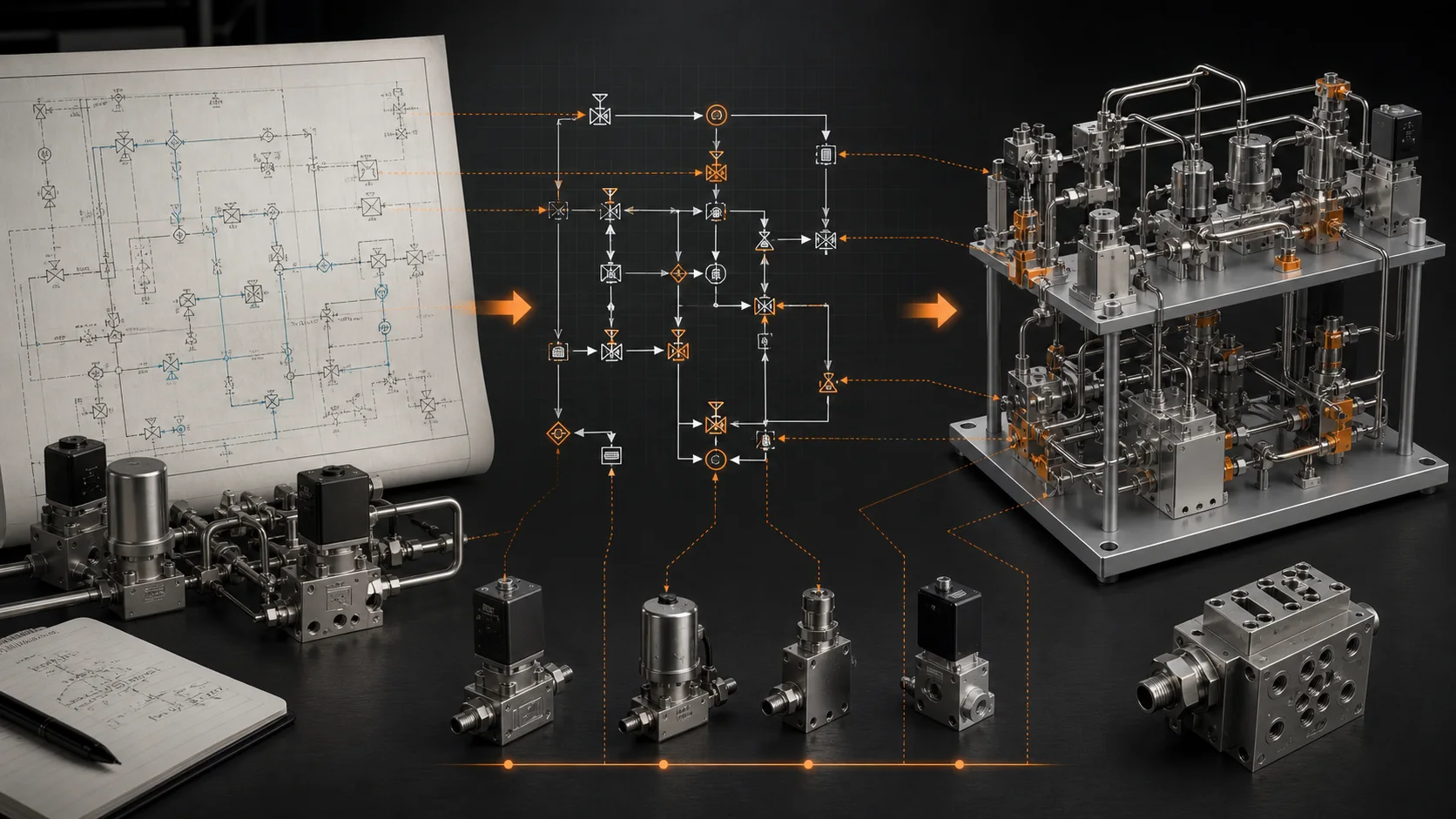
The missing step is physical arrangement
A P&ID says which equipment, valves, instruments and lines belong to the process and how they should connect. It does not normally specify where every component belongs in XYZ space, how each model should be oriented or which feasible route should connect each pair of ports.
Two coupled solvers
The assembly-layout solver chooses approved components, positions, orientations, interface alignments and an equipment envelope. The routing solver searches physical paths, fittings, bends and layer changes between compatible ports. They operate as a coupled loop: a placement changes the available routes, while an infeasible or costly route can force a different placement.
What “optimized” means
Within a configured deployment, the search can compare feasible candidates against customer-approved objectives such as a smaller envelope, shorter routes, fewer fittings or lower assembly complexity while treating interface compatibility, collision, bend rules, access, mounting and safety requirements as hard constraints.
Native execution and read-back
The selected physical solution is compiled into deterministic assembly instructions, executed through a governed SolidWorks environment and saved as a native, editable .SLDASM. MST then reopens and reads the assembly back so component, transform, mate, rebuild, route and traceability facts can be reviewed against the declared obligations.
Boundary: “optimized” is relative to the declared objectives, hard constraints, allowed models, search space and stopping criteria. MST does not claim an unconditional global optimum, arbitrary whole-machine autonomy, universal CAD/PDM support or autonomous production release. Engineers retain approval authority.
MST Engineering Intelligence. “MST Launches Mechanical Assembly AI for P&ID-to-SolidWorks Equipment Design.” MST Engineering Intelligence. Updated 2026-09-06. https://mst-us.ai/mst-launches-mechanical-assembly-ai/
CUSTOMERS · PARTNERS · INVESTORS
Talk to the engineering team.
Bring a non-confidential P&ID question, pilot boundary or technical diligence request. Protected engineering material is exchanged only after identity, NDA and scope review.
Operated by MOORE SOLUTION TECHNOLOGY PTE. LTD. · Singapore UEN 202315239E